Everyday is a Second Chance: A Designer's Review
As someone who spends hours staring at screens digitizing patterns and then even more time hunched over embroidery machines, I have developed a keen eye for what works in the real world. When I first encountered the Everyday is a Second Change design, my initial reaction was one of cautious optimism. In the crowded marketplace of Crafts and Graphics, inspirational quotes are everywhere. However, the execution of this specific file suggests it was built with actual stitching in mind, not just digital aesthetics. The description notes that these SVG cutting files have been tested at the highest quality, which is a promising start, but as a practitioner, I need to know how it translates from a 6×6 300 dpi transparent image to a tangible, stitched reality.
First Impressions and Visual Personality
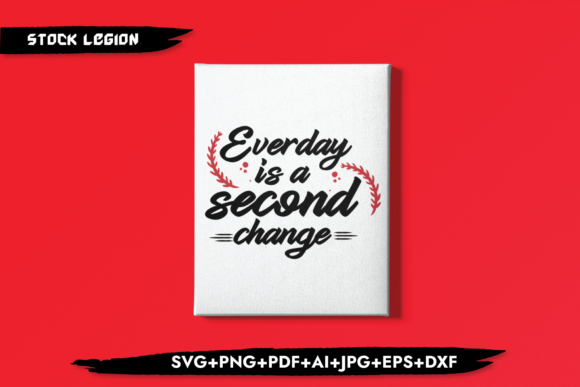
The mood of Everyday is a Second Change is undeniably uplifting. It carries a gentle, encouraging energy that fits perfectly into the current trend of mindfulness and self-care decor. Visually, the layout appears balanced, avoiding the cluttered look that often plagues quote-based designs. For an embroidery project, spacing is everything. If letters are too close, they bridge together with thread; if they are too far apart, the phrase loses its impact. This design seems to strike a middle ground, offering enough negative space to allow the stitch density to breathe without compromising readability.
The typography style suggests a blend of modern simplicity and hand-lettered charm. This is crucial because overly complex fonts can become a nightmare when converted into a machine embroidery design. Sharp corners and tiny serifs often require excessive trimming or result in messy jump stitches. From the preview, the lines look smooth enough to handle well with standard satin stitch or clean fill stitch techniques, depending on how the final digitized version is structured. It feels like a design that respects the limitations of the needle while maximizing visual appeal.
Real-World Application: The Tote Bag Scenario
To truly evaluate this asset, I imagined a specific client request: a custom order for a local boutique needing a run of eco-friendly tote bags. These aren't just promotional items; they are meant to be daily carriers for groceries and books, subject to wear and tear. Placing Everyday is a Second Change on a canvas tote bag design makes immediate sense. The message aligns with the sustainable ethos of reusable bags, and the 6×6 inch scale mentioned in the product details is ideal for the front panel of a standard shopper.
In this scenario, the finished product needs to withstand frequent washing. A design with moderate stitch density performs better here than one that is overly dense, which can cause the fabric to pucker or the threads to snap under tension. Assuming the underlying file structure supports this, the design would add significant value to the bag, transforming a plain utility item into a handmade product with personality. Customers are drawn to items that speak to them, and this quote offers a moment of positivity every time they reach for their keys or wallet.
Versatility Across Apparel and Home Decor
Beyond tote bags, the versatility of this graphic opens doors for various custom apparel projects. Imagine this stitched onto the chest of a heather grey sweatshirt embroidery piece. The contrast between the soft fabric texture and the structured thread creates a professional look that elevates the garment from basic loungewear to boutique fashion. It would also work beautifully as a focal point on a kitchen towel or a pillow cover for nursery decor. The phrase "Second Change" (or "Second Chance," depending on the intended spelling variation in the specific file iteration) resonates deeply in spaces dedicated to growth, such as a home office or a child's room.
For Etsy seller accounts and small shop product lines, having a reliable go-to design is gold. This asset could serve as the centerpiece for a "New Beginnings" collection, paired with other motivational assets. It is suitable for holiday embroidery gifts, particularly for New Year's resolutions or back-to-school seasons where fresh starts are top of mind. The ability to scale this within the 6×6 parameter allows it to fit on everything from a baby onesie—making it a sweet baby embroidery gift—to a larger throw blanket.
Technical Considerations and Fabric Challenges
However, no design is without its challenges, and a responsible reviewer must highlight where caution is needed. While the files are described as smooth and professional, the physical medium matters immensely. If you are applying this to a stretchy fabric like a tri-blend t-shirt, you must be vigilant about your stabilizer choice. Without proper backing, the weight of the thread can distort the fabric, causing the text to warp after the hoop is removed.
Similarly, working with dark fabric requires careful selection of thread colors. A light-colored design on black denim looks striking, but only if the digitizing includes a proper underlay to prevent the dark background from showing through the stitches. If the design relies on fine running stitch outlines, these might get lost on textured materials like terry cloth or heavy wool. In such cases, a bolder fill approach might be necessary, which may require adjusting the original embroidery file settings if your machine software allows.
Curved surfaces present another hurdle. Attempting to stitch this on a cap or hat requires a cap frame and precise centering. The 6×6 size might be too wide for a standard dad hat, potentially wrapping around the curve too aggressively. In these instances, scaling down the design while maintaining legibility is key. Always test on scrap fabric first. This cannot be overstated. A printable mockup looks perfect on screen, but thread behaves differently than pixels.
Business Value and Professional Presentation
From a business perspective, incorporating Everyday is a Second Change into your catalog can enhance brand consistency if your shop focuses on positive, lifestyle-oriented goods. High-quality design assets like this save time on creation, allowing you to focus on production and marketing. When a customer sees clean, crisp lettering with no loose threads or puckering, it builds customer trust. It signals that you care about the details, which justifies a higher price point for your commercial embroidery services.
Furthermore, for those selling digital embroidery file packages, ensuring that the included formats are compatible with major machine brands is essential. While the product mentions a ZIP file with high-quality testing, always verify the specific extensions (like PES, DST, EXP) before listing them for sale to avoid customer complaints. Using this design in your own printable mockup listings can also help visualize the potential for buyers, showing them exactly how it looks on a personalized gift or an embroidered patch.
Final Verdict for Makers
In conclusion, Everyday is a Second Change stands out as a practical, emotionally resonant addition to any designer's library. Its strength lies in its adaptability across different fabric textures and product types, from aprons to blankets. While it requires the usual due diligence regarding stabilizers and thread contrasts, the foundational design appears robust enough to handle real-world application. For creative entrepreneurs looking to expand their range of inspirational goods, this graphic offers a solid foundation for creating meaningful, marketable items. Just remember to respect the technical limits of your machine and materials, and this design will likely become a staple in your workflow.