Reviewing the 80th Birthday Vintage SVG for Embroidery
As a designer who has spent countless hours digitizing and stitching everything from delicate baby onesies to heavy-duty workwear, I approach every new machine embroidery design with a mix of curiosity and caution. We have all been there: you download a file that looks crisp on the screen, only to find it turns into a tangled mess of thread breaks and puckering once it hits the fabric. That is why I took a close look at the 80th Birthday Svg, 1940-1949 Vintage to see if it holds up under the needle. This isn’t just about whether the graphic looks nice; it is about whether it functions as a reliable embroidery file for real-world projects.
First Impressions: Nostalgia Meets Modern Craft
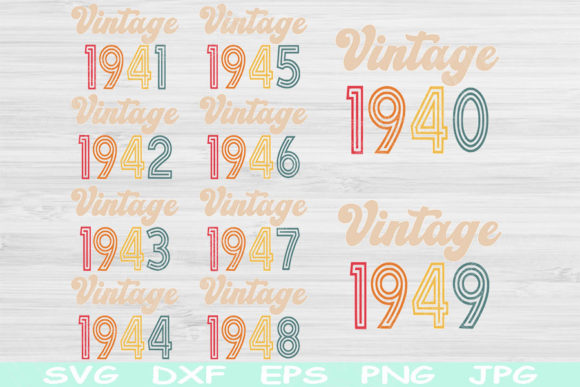
The immediate appeal of this design lies in its thematic clarity. The "Vintage 1940-1949" concept taps into a specific era of style—think classic typography, mid-century aesthetics, and a sense of timeless celebration. For an Etsy seller or a craft business owner, this is gold. Eightieth birthdays are significant milestones, and customers are often looking for something more sophisticated than generic balloon graphics. This design feels mature yet festive.
Visually, the layout appears balanced. When evaluating design assets like this, I look for negative space. A cluttered design rarely translates well to thread. From what I can assess, this SVG offers a clean structure that should allow the texture of the fabric to breathe. It does not scream for attention; instead, it invites a closer look, which is exactly what you want in a personalized gift. The mood is warm and commemorative, making it suitable for a wide range of recipients, from grandparents to historic enthusiasts.
Real-World Application: The Sweatshirt Test
To truly judge a design, you have to imagine it stitched out. I recently worked on a custom order for a client wanting a commemorative piece for her father’s eightieth birthday. She wanted something he could wear comfortably to a family dinner. I envisioned this 80th Birthday Svg, 1940-1949 Vintage centered on a high-quality charcoal grey sweatshirt. This is a classic sweatshirt embroidery scenario.
In this context, the design’s vintage aesthetic pairs beautifully with the soft, slightly textured surface of fleece or French terry cloth. The key here is contrast. If you are using a dark garment, you need to ensure your thread colors pop. A cream or antique white thread would likely enhance the "vintage" feel while maintaining readability. Because the design is likely intended as a statement piece, it needs to be large enough to be legible but not so dense that it stiffens the garment. For a project like this, the design serves as the focal point, turning a simple piece of custom apparel into a cherished keepsake.
Versatility Across Products
Beyond sweatshirts, where else does this fit? I see strong potential in tote bag design. A canvas tote with this vintage birthday graphic makes for a practical and stylish gift bag for the birthday party itself. It is also a great candidate for an embroidered patch. If you digitize this correctly—or if the file comes pre-digitized with proper saturation—it can be stitched onto a backing and ironed or sewn onto jackets, hats, or denim bags. This expands its utility for small shop product lines, allowing you to offer multiple items from a single digital embroidery file.
However, I would hesitate to use this on very small items like baby clothes unless the design is significantly scaled down and simplified. The "1940-1949" text requires a certain minimum size to remain legible. On a baby embroidery project, fine details can get lost or become scratchy against sensitive skin. Always consider the end-user’s comfort.
Technical Considerations for Stitching Success
While the visual appeal is strong, the technical execution is where many designers stumble. Since this is provided as an SVG, it is primarily a vector graphic. For those using it for cutting machines, it is ready to go. But for commercial embroidery, you must ensure you have the correct embroidered version or digitize it properly. If you are converting this SVG yourself, pay close attention to stitch density.
Vintage-style fonts often have serifs or varying stroke widths. In embroidery, thin lines can disappear, and thick areas can bunch up. I recommend using a combination of satin stitch for smaller text elements and fill stitch for larger blocks, ensuring you use appropriate underlay stitches to prevent shifting. If the design includes any intricate borders or decorative elements, a running stitch outline might help define the shape without adding excessive bulk.
Fabric and Stabilizer Choices
The choice of fabric texture plays a huge role in the final outcome. Smooth cottons and poly-blends are forgiving. However, if you are stitching on textured towels or rough canvas, you may need to adjust your tension. Always use a proper stabilizer. For stretchy fabrics like t-shirts, a cut-away stabilizer is non-negotiable to prevent the design from warping after washing. For woven fabrics like aprons or pillow covers, a tear-away might suffice, but test first.
Be cautious with dark fabrics. If the design has open spaces, the background fabric will show through. This can be a desirable effect for a subtle look, but if you want solid coverage, you may need to increase the density or add a backing layer. Also, consider the hoop size. Ensure your machine’s hoop can accommodate the full width of the design, especially if you plan to add names or dates around the central vintage graphic.
Commercial Viability and Brand Consistency
For handmade product sellers, consistency is key. This design fits well within a brand that values nostalgia, quality, and personalization. It enhances buyer engagement because it tells a story. When a customer sees "Vintage 1940-1949," they immediately connect with the history and the milestone. This emotional connection increases the perceived value of the finished product.
Before listing this on your store, create a printable mockup or stitch out a sample for your photos. Real stitching photos sell better than digital renders because customers want to see the texture and quality of the thread work. Highlight the craftsmanship in your Etsy listings. Mention the care instructions, especially if the item is a holiday gift or a frequently washed item like a kitchen towel.
Final Designer Notes
Before you commit to a large batch of production, follow these steps:
- Test on scrap fabric: Always stitch a test piece on the same material you plan to use for the final product. Check for thread breaks and registration issues.
- Check licensing: Confirm whether the digital embroidery file allows for commercial use. Some creators allow personal use only, while others permit selling finished items. Never assume.
- Review detail levels: Zoom in on the SVG. Are there tiny anchor points or overlapping paths that might cause issues in digitizing? Clean up the vector if necessary.
- Contrast check: View the design in black and white. If it loses definition, you may need to adjust line weights or spacing for better embroidery clarity.
- Verify file formats: Ensure you have the correct format for your machine (PES, DST, JEF, etc.) if purchasing a pre-digitized version. If working from SVG, ensure your software handles the conversion smoothly.
In conclusion, the 80th Birthday Svg, 1940-1949 Vintage is a promising asset for designers and makers. It bridges the gap between nostalgic charm and modern crafting trends. With careful attention to digitizing settings, fabric choice, and stabilizer selection, it can elevate your embroidery project from standard to standout. Whether you are creating a one-off personalized gift or stocking your small shop product line, this design offers the versatility and visual appeal needed to satisfy discerning customers. Just remember: the best designs are not just seen; they are felt in the quality of the stitch.