Trump 2024: A Designer's Take on Political Embroidery
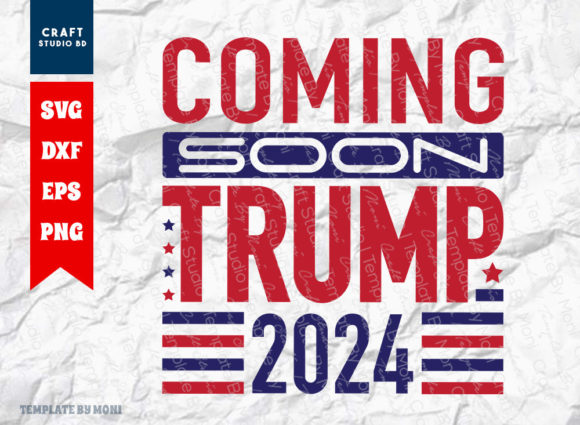
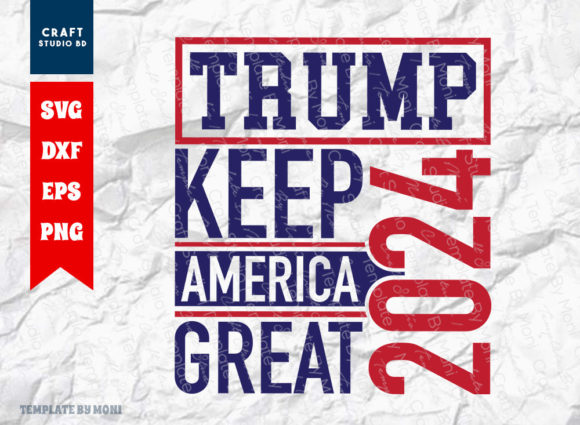
As a designer who spends most of my day staring at stitch maps and thread charts, I approach political graphics with a specific set of criteria. It is not just about the message; it is about how that message translates into thread, fabric, and wearability. When I first pulled up the Trump 2024 design files, my immediate reaction was to assess its potential beyond the screen. This isn't just a digital asset for a cutting machine; for us in the embroidery world, it represents a challenge in translation. The source material describes this as an SVG cut file compatible with Silhouette, Cricut, and Brother machines, which tells me the lines are likely clean and vector-based. However, converting a sharp vector line into a machine embroidery design requires a keen eye for detail, density, and flow.
The Visual Personality and First Impressions
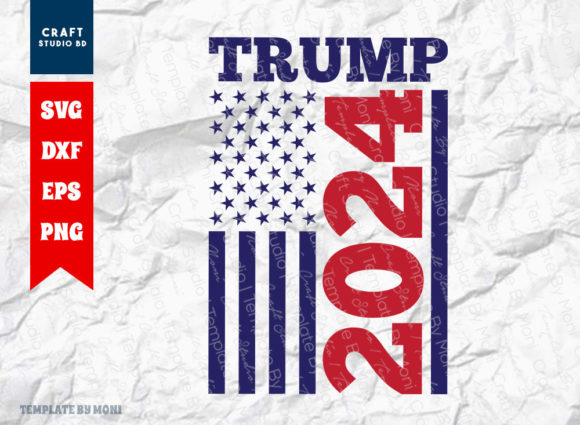
The mood of this graphic is bold and declarative. In the realm of Crafts and Graphics, political designs often rely on strong typography and high-contrast imagery to make an instant impact. My first impression of the Trump 2024 layout is that it demands attention. The shapes appear substantial, which is generally a good sign for embroidery. Delicate, hairline details often get lost under the tension of the needle, but a design with solid forms suggests it can handle the bulk of satin or fill stitches without collapsing.
Visually, the design feels at home on structured garments. It has the kind of presence that works well on a heavyweight cotton sweatshirt or a canvas tote. The "quote" aspect mentioned in the product description implies text integration, which is always the trickiest part of digitizing. If the lettering is too small or the kerning too tight, the threads will bridge and merge, ruining the readability. For a project like this, clarity is king. A voter needs to read the message from across a room, and an embroidery customer needs to see crisp edges on their custom apparel.
Real-World Application: The Campaign Tote Scenario
Let's walk through a realistic scenario where I would deploy this design. Imagine a local boutique owner or an Etsy seller preparing for an upcoming election cycle. They want to create a line of limited-edition merchandise that feels handmade and premium, distinct from the mass-produced screen-printed shirts flooding the market. They choose a natural, unbleached canvas tote bag as their base.
In this context, the Trump 2024 design becomes the focal point. Because canvas has a visible weave and some texture, the embroidery needs to sit on top of the fabric rather than sinking into it. I would approach this by ensuring the background of the design uses a dense fill stitch to cover the fabric grain completely, creating a smooth surface for any text or finer details. The result is a handmade product that feels substantial. Unlike a vinyl decal that might crack after a few washes, high-quality stitching adds value and durability. Customers perceive embroidered goods as higher-end, which justifies a higher price point for the small shop owner.
Another strong contender for this graphic is a structured baseball cap. Caps are notoriously difficult due to the curved surface, but a bold design like this, if scaled correctly, can look incredibly professional. The key here is avoiding overly large continuous runs of stitching that might cause the fabric to pucker on the curve. If the design includes an American flag motif or similar patriotic elements, using a satin stitch for the borders can add a nice sheen that catches the light, enhancing the visual appeal of the finished product.
Technical Considerations and Fabric Choices
While the potential is high, there are areas where caution is necessary. The product description notes compatibility with various cutting machines, but it does not specify stitch counts or recommended hoop sizes for embroidery. This is a critical gap. Before committing to a production run, you must verify the hoop size requirements. If the design is larger than a standard 4x4 inch hoop, you will need a machine capable of handling 5x7 or larger fields, or you will have to deal with the complexity of re-hooping and splitting the design.
Fabric choice is equally vital. On stretchy fabrics like thin jersey t-shirts, a dense political graphic can cause significant distortion. The weight of the thread pulls the fabric, leading to a warped look that undermines the professionalism of the custom apparel. For these materials, I would strongly advise using a heavy-duty cutaway stabilizer to provide a permanent foundation. Conversely, on thick fleece or hoodies, the design needs enough punch to stand out against the loft of the fabric. You might need to increase the stitch density slightly or use thicker thread weights to ensure the Trump 2024 text doesn't get swallowed by the pile.
Dark fabrics present another challenge. If you are stitching white or light-colored threads onto a navy or black garment, the background fill must be absolutely solid. Any gaps in the stitch density will reveal the dark fabric underneath, making the colors look muddy. Testing on scrap fabric of the exact same weight and color is non-negotiable. Do not skip this step. What looks perfect on your monitor in a printable mockup can look entirely different once the needle hits the cloth.
Enhancing Brand Value and Customer Trust
For creative entrepreneurs and craft business owners, the quality of the final stitch directly correlates to brand reputation. A sloppy political patch with loose threads or poor registration can alienate customers faster than a disagreeable opinion. Using a well-executed version of this design signals that you care about quality. It transforms a simple statement into a collectible item.
When selling these items, whether at a craft fair or online, the tactile nature of embroidery adds a layer of authenticity. It feels personal. For a personalized gift or a holiday embroidery project for a family member, this design offers a way to express support that feels crafted with care. The durability of the stitch means the item can be worn repeatedly, washed, and enjoyed for years, increasing the perceived value for the buyer.
Final Verdict and Designer Notes
The Trump 2024 graphic holds significant promise for the right projects. Its bold nature suits the medium of embroidery well, provided the technical execution matches the visual intent. However, since the provided details focus on SVG and cut files, embroidery professionals must take extra steps to ensure the design is optimized for needlework.
Here are my essential recommendations before you start stitching:
- Verify Licensing: The product description mentions commercial use for cut files, but embroidery licensing can differ. Confirm explicitly that you are allowed to sell finished embroidered goods featuring this design.
- Check File Formats: Ensure you have access to actual embroidery formats (PES, DST, EXP, etc.) if you are not digitizing it yourself. SVGs are for cutting, not stitching directly.
- Test Thread Contrast: Run a test on both light and dark fabrics to see how your chosen thread colors interact with the base material.
- Inspect Small Details: Look closely at any tiny text or intricate corners. If they look fragile in the preview, they will likely break or bunch up during stitching.
- Stabilizer Strategy: Match your stabilizer to the fabric. Use tear-away for stable wovens and cutaway for knits or stretchy materials.
In conclusion, while this design originates as a digital asset for Crafts and cutting, its transition to embroidery offers a unique opportunity to create high-value, durable merchandise. With careful attention to fabric selection, stabilization, and stitch quality, the Trump 2024 design can be a standout piece in any small shop product lineup or personal collection. It is a reminder that in our industry, the difference between a good idea and a great product lies entirely in the execution.