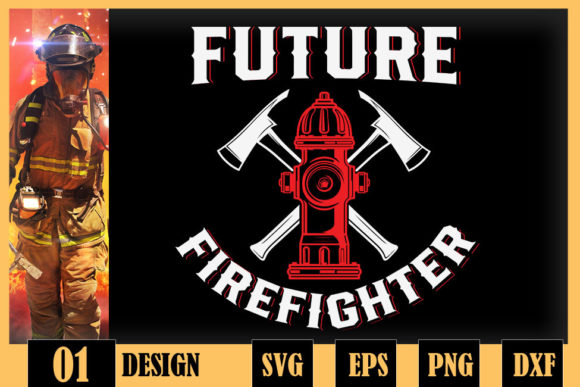
Future Firefighter Tools Elements: A Designer's Review
When I first pulled up the Future Firefighter Tools Elements on my screen, I wasn't just looking at a digital file; I was immediately visualizing the texture of thread against fabric. As someone who spends hours hooping garments and troubleshooting stitch outs for clients, my first impression is always about potential. Does this design have the structural integrity to hold up on a heavy canvas tote? Will the details get lost on a textured sweatshirt? This collection, categorized under Crafts and Graphics, offers a modern twist on a classic theme, but let's dig into how it actually performs when you move from the monitor to the machine.
Visual Personality and First Impressions
The aesthetic of Future Firefighter Tools Elements leans heavily into a sleek, forward-thinking vibe. Unlike traditional firefighter motifs that often rely on bulky, old-school badges, these elements feel streamlined. The shapes are clean, suggesting a design that translates well into both satin stitch borders and smooth fill stitch areas. For a designer, this is crucial. Overly complex vectors can turn into a bird's nest of thread if the stitch density isn't managed well, but the layout here suggests a balance between detail and durability.
The mood is professional yet approachable. It feels right for a boutique brand launching a line of safety-conscious apparel or a parent wanting a unique personalized gift for a child aspiring to be a hero. The visual personality isn't shouting; it's asserting quality. When I imagine this stitched out, I see crisp lines that would look exceptional on a structured cap or a flat tote bag design. It avoids the clutter that often plagues thematic collections, making it a versatile asset for various embroidery projects.
Real-World Application: The Custom Sweatshirt Scenario
Let's walk through a realistic scenario. Imagine a client comes to your craft business requesting a custom sweatshirt embroidery for a local fire department's recruitment drive. They want something that looks modern, not like a surplus store uniform. This is where Future Firefighter Tools Elements shines. Because the graphics are likely vector-based or high-resolution raster images intended for software like Adobe Illustrator or Corel Draw, you have the flexibility to scale them before digitizing or using them as a reference for your machine embroidery design.
In this specific case, I would place the primary element on the left chest for a subtle branding effect and perhaps use a larger variation on the back. The clean lines of the "future" theme would pop beautifully against a heather grey or navy fleece. However, you must consider the fabric texture. Fleece has a nap. If the design relies on tiny running stitches or extremely fine details, they might sink into the pile. My advice? Test a section on a scrap piece of the exact same garment first. If the elements are bold enough, they will sit on top of the fabric nicely, creating a finished product that feels premium rather than cheap.
Versatility Across Products
Beyond apparel, these elements are goldmines for other handmade products. Consider an embroidered patch. Patches require dense stitching and clear outlines to prevent fraying after washing. The distinct shapes in this collection seem suitable for merrowed edges or a tight satin border. You could also apply these to nursery decor, such as a baby embroidery project on a muslin blanket. Here, the "future" aspect adds a whimsical, aspirational touch that parents love for holiday embroidery gifts or baby showers.
For the Etsy seller or small shop owner, versatility equals inventory depth. You aren't limited to one item. These graphics could adorn aprons for a cooking class themed around safety, pillow covers for a man cave, or even kitchen towels. The key is matching the complexity of the design to the item's function. A tea towel gets washed weekly; a decorative pillow does not. Adjust your stabilizer choice accordingly to ensure the commercial embroidery work lasts.
Technical Considerations and Potential Pitfalls
While the design potential is high, we need to talk about where caution is required. Not every surface is friendly to detailed graphics. If you are working with stretchy fabrics like jersey knits for t-shirts, you must be wary of distortion. The Future Firefighter Tools Elements might look perfect on screen, but if the hoop size forces you to compress the image or if the fabric shifts during stitching, those sharp futuristic lines could warp.
Furthermore, pay close attention to thread colors. High-contrast designs rely on the separation between light and dark threads. If you are stitching on a dark fabric, ensure your digitizing (or the software conversion process) accounts for underlay stitches so the base fabric doesn't peek through the fill areas. Conversely, on white fabric, ensure your shadow effects or darker outlines don't look muddy. Always run a black-and-white mockup in your software to check contrast before threading the needle.
Small hoop sizes present another challenge. If you attempt to shrink these elements down for a infant onesie or a curved cap front, verify that the smallest details remain viable. Tiny lettering or intricate tool handles can become indistinguishable blobs if scaled too small. It is better to simplify the design for small applications than to force a large graphic into a 4x4 hoop and lose the definition.
Designer Notes for Best Results
To get the most out of these assets, treat them as a starting point for your creativity, not a final mandate. Here is my practical checklist for using Future Firefighter Tools Elements effectively:
- Test on Scrap Fabric: Never skip this. Stitch the design on the same weight and type of material you intend to sell.
- Check Licensing: Since these are provided as graphics for software like Cricut Design Space, Silhouette Studio, and Adobe Photoshop, confirm the license terms. Can you sell the physical custom apparel? Can you sell the digital file itself? Usually, you can sell the finished handmade item, but reselling the raw file is often prohibited.
- Review Stitch Density: If you are digitizing these yourself from the provided graphics, watch your density settings. Too dense, and the fabric puckers; too sparse, and the backing shows.
- Stabilizer Selection: Match your stabilizer to the fabric. Use cut-away for stretchy garments and tear-away for stable woven cottons like tote bags.
- Contrast Check: View your design in grayscale to ensure the visual hierarchy holds up without relying solely on color.
Final Verdict on Value and Appeal
In the world of design assets, value is determined by usability. Future Firefighter Tools Elements offers a strong foundation for creators who want to move beyond generic clip art. It allows for a level of customization that elevates a simple t-shirt into a branded piece of merchandise. For the creative entrepreneur, this means higher perceived value and potentially higher price points for your small shop product listings.
The clarity of the shapes suggests that, with proper technique, the stitching will be clean and professional. This directly impacts customer trust. A sloppy stitch job ruins a good design, but a good design executed with precision builds a reputation. Whether you are creating a printable mockup for your online store or stitching a real holiday gift, these elements provide the visual hook needed to engage buyers.
Ultimately, this collection fits best in the hands of a maker who understands their materials. It is not a magic button, but a high-quality ingredient. Use it wisely, respect the limitations of your machine and fabric, and you will produce embroidery files and finished goods that stand out in a crowded market. Just remember to verify the specific file formats and compatibility with your preferred software suite before diving in, ensuring a smooth workflow from concept to creation.